

“Happiness karma isn’t about getting what you want. It’s about creating the conditions for happiness within what you already have.”
What Is Happiness Karma?
Karma traditionally means “action” in Sanskrit. Your actions have consequences that return to you (in this life or another).
But happy karma is simpler than that.
Happiness karma is the principle that the happiness you create around you comes back to you multiplied.
You choose to smile at someone. → They smile back → You feel lighter → That lightness spreads → You attract more positive people → Your life becomes lighter.
Or the opposite:
You choose bitterness, → you push people away. → You feel alone → That loneliness spreads → You attract negativity → Your life becomes heavier.
Types of Happiness Karma
Happiness karma isn’t one-dimensional. It manifests in different ways depending on what you practice, where you apply it, and how you express it.
1. Understanding these different types helps you:
2. Recognize karma in various life areas
3. Choose which practices to focus on
4. Watch how happiness multiplies across different aspects of your life.
5. Build a more complete happiness practice
1. Gratitude Karma
What it is: You notice and appreciate what you already have.
How it works: When you say thanks for your coffee, your family, your job, and your health—your brain starts looking for more things to appreciate. Pretty soon, everywhere you look, you see more good stuff. And when you appreciate things, people want to give you more. It’s like the universe sees you’re grateful and sends you more to be grateful for.
Real example: You thank your partner for small things → they feel appreciated → they do more nice things → your relationship gets better → more to be grateful for. That’s the
2. Kindness Karma
What it is: You do kind things for people (with no strings attached).
How it works: When you help someone, you feel good (your brain releases happy chemicals). They feel satisfied. Then, weeks later, when you require assistance, an unexpected person comes to your aid. That’s kindness’s karma. What you give comes back—sometimes from completely unexpected places.
For example: If you help a stranger with groceries, you will feel good, and then weeks later, a coworker may help you move, which is an instance of karma returning.
3. Honesty is Karma
What it is: You tell the truth instead of making up lies.
How it works: At first, honesty might feel scary. But once you stop lying, you don’t have that anxiety about being caught. You sleep better. People trust you more. Real friends stick around because they actually know you. That’s the karma—peace in your life and real relationships.
Real example: You admit you made a mistake at work → boss respects you → you get promoted → people trust you with more responsibility. That’s what happens when you’re honest.

4. Presence of Karma
What it is: You actually pay attention when you’re with people (no phone, no distractions).
How it works: When someone feels like you actually care and are listening, they feel valued. They open up to you. They listen to you back. Your relationships get deeper. You don’t miss opportunities because you’re actually paying attention. Life becomes better because you’re actually there for it.
Real example: You put your phone away during dinner. → your family feels heard → they tell you real stuff → your relationships get stronger → people want to spend time with you. That’s the return.
5. Generosity Karma
What it is: You give freely—time, money, help—without keeping score.
How it works: When you give without expecting something back, your brain stops worrying about not having enough. You feel rich. And guess what? Good things come back. Not always from the same person, but they come. People help you. Opportunities show up. Your life feels fuller.
Real example: You give money to someone in need → you feel good about yourself → someone pays for your coffee → a friend helps you move → money flows better. That’s abundance karma.
6. Forgiveness Karma
What it is: You let go of anger and move forward instead of holding grudges.
How it works: Holding a grudge is like carrying a heavy rock. It doesn’t hurt the other person—it hurts you. When you forgive (especially yourself), you put the rock down. You feel lighter. You sleep better. Your peace comes back. And when you’re peaceful, you attract peaceful people and situations.
Real example: Someone wronged you, but you forgive and move on → you feel free → you stop attracting drama → people around you relax → your life gets easier. That’s what forgiveness gives back.
7. Compassion Karma
What it is: You understand that everyone is struggling, and you care about that.
How it works: When you’re compassionate to others, you’re not judging. People feel safe around you. They open up. They’re compassionate back. The world becomes a kinder place around you. And when you need compassion, you get it because you created that kind of world.
Real example: You show compassion to a difficult person → they soften → they’re nicer to the next person → kindness spreads → when you’re struggling, people show you compassion. That’s the return.
8. Integrity Karma
What it is: You live according to your values (you do what you say you believe in).
How it works: When your actions match your words, you respect yourself. No guilt. No inner conflict. People sense you’re real and they trust you. Opportunities come because you’re the kind of person who follows through. Your life feels meaningful because you’re actually living your values.
Real example: You believe in helping people and you work in healthcare → work feels meaningful → people respect you → you get better positions → your life feels like it matters. That’s integrity returning.
9. Growth Karma
What it is: You learn, improve, and keep evolving.
How it works: When you learn something new, your brain literally changes. You become more capable. You’re more interesting. More confident. More opportunities show up because you have more skills. You help others learn. It just keeps building.
Real example: You learn new skill → you practice → you get good → you teach others → they benefit → they help you → more doors open. That’s growth returning.
10. Resilience Karma
What it is: You get knocked down and get back up instead of staying down.
How it works: Every time you face difficulty and keep going, you prove to yourself you’re strong. You become unbreakable. Others see your strength. They want to be around you. They ask for your help. You become someone people lean on. Your strength returns as leadership and respect.
Real example: You fail, but you try again → you eventually succeed → you show others failure isn’t permanent → they trust you → you become leader → that’s resilience returning.
11. Contribution Karma
What it is: You give to something bigger than yourself (community, cause, people).
How it works: When you contribute—whether it’s volunteering, mentoring, creating, or helping—your life feels purposeful. You feel part of something. People are grateful. The community supports you. You feel like you matter. And that feeling is worth more than money.
Real example: You mentor a young person → they grow up → they mentor others → your influence spreads → you feel legacy → people support you because you supported them. That’s purpose returning.
12. Authenticity Karma
What it is: You’re real, you’re yourself, you don’t perform or pretend.
How it works: When you stop performing and be yourself, some people don’t like you—and that’s fine. But your people? They LOVE you. Relationships become easy because you’re not maintaining a fake version. You attract people who actually like YOU. Your energy goes into living, not performing. Your life becomes easier and more joyful.
Real example: You stop pretending to be someone else → real friends stay, fake ones leave → people who like you stick around → relationships are easy → life is peaceful. That’s what authenticity gives back.
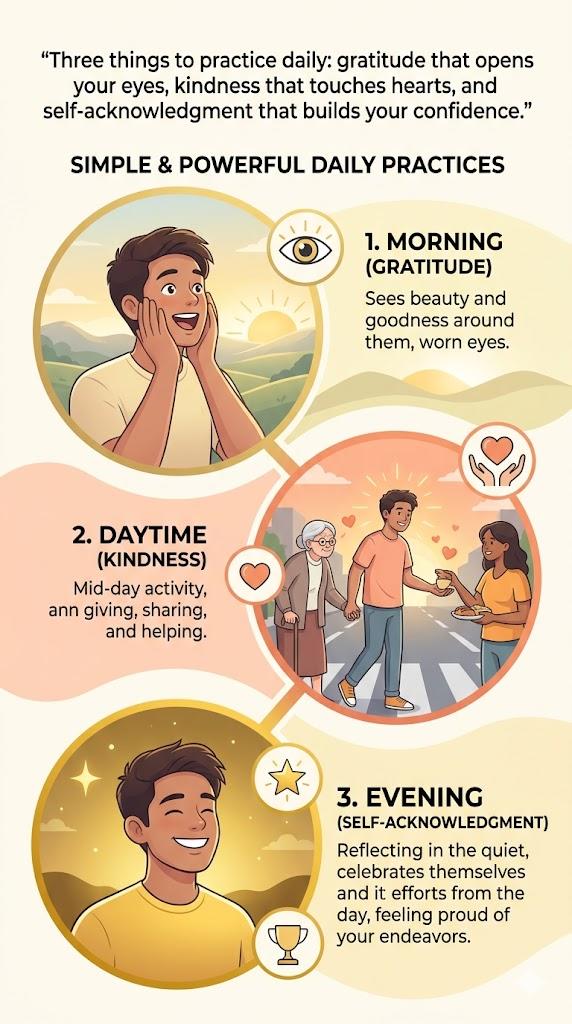
“If you want others to be happy, practice compassion. If you want to be happy, practice compassion.” — Dalai Lama
Simple way of Happiness Karma
Gratitude karma: Give thanks → notice more good → get more good back
Kindness karma: Be kind → feel good → get unexpected kindness back
Honesty karma: Tell the truth → sleep better → earn real trust → life gets peaceful
Presence karma: Really listen → people feel heard → they listen back → relationships deepen.
Generosity karma: Give freely → feel abundant → abundance returns → community supports you.
Forgiveness karma: Let go of grudges → feel lighter → attract peaceful people
Compassion karma: Understand suffering → people feel safe → compassion returns.
Integrity karma: Live your values → respect yourself → people trust you → doors open.
Growth karma: Keep learning → become capable → more opportunities → help others
Resilience karma: Keep getting up → become strong → become a leader → people lean on you.
Contribution karma: Give to something bigger → feel purpose → community supports you → legacy spreads.
Authenticity karma: Be yourself → attract your people → life becomes easy → you’re magnetic.
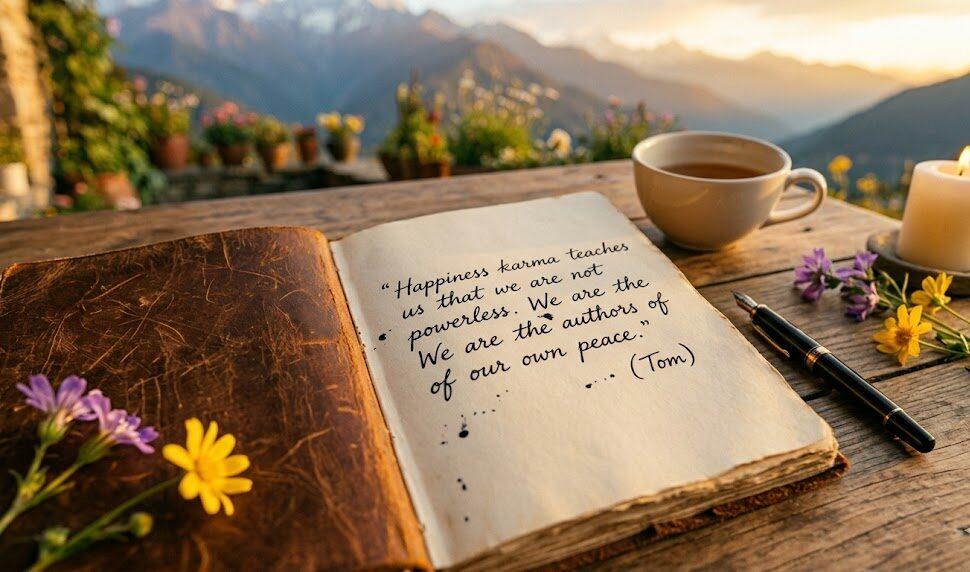
Happiness Karma
Happiness karma isn’t one-dimensional. It manifests in different ways depending on what you practice, where you apply it, and how you express it. Think of it like light refracted through different prisms—when you practice gratitude, you’re creating one kind of karma that trains your brain to notice goodness; when you practice kindness, you’re creating a different frequency that opens hearts and brings unexpected help; when you practice honesty, you’re building trust and peace.
These aren’t competing energies; they’re different expressions of the same law: what you give returns to you. Understanding these different types helps you recognize karma in various life areas (your relationships might shift through honesty karma while your work transforms through growth karma), choose which practices to focus on based on what your life needs most right now, see how happiness compounds across different domains when you stack multiple types together, and build a more complete happiness practice that addresses every area of your existence.
Rather than feeling you need to be perfect at everything simultaneously, you can focus on one type of karma at a time, master it over thirty days, and add another. By the end of a year practicing even just a few types, you won’t recognize your life—not because circumstances changed, but because you deliberately created the karma for happiness in multiple dimensions. This is the power of understanding that happiness karma isn’t about perfection in one way; it’s about intention in many ways.
Kindness alone is good, but kindness combined with presence creates something exponentially more powerful. Gratitude alone helps, but gratitude married with generosity and integrity creates a transformed life. When you understand the different types, you stop waiting for one magical practice to fix everything. Instead, you become an architect of your own happiness, deliberately choosing which frequencies to broadcast into the universe, watching them return in expected and unexpected ways, and building a life that feels rich, meaningful, and genuinely happy—not someday, but now.
Great content! Keep up the good work!
Reply
Thanks for taking the time to respond.
Reply